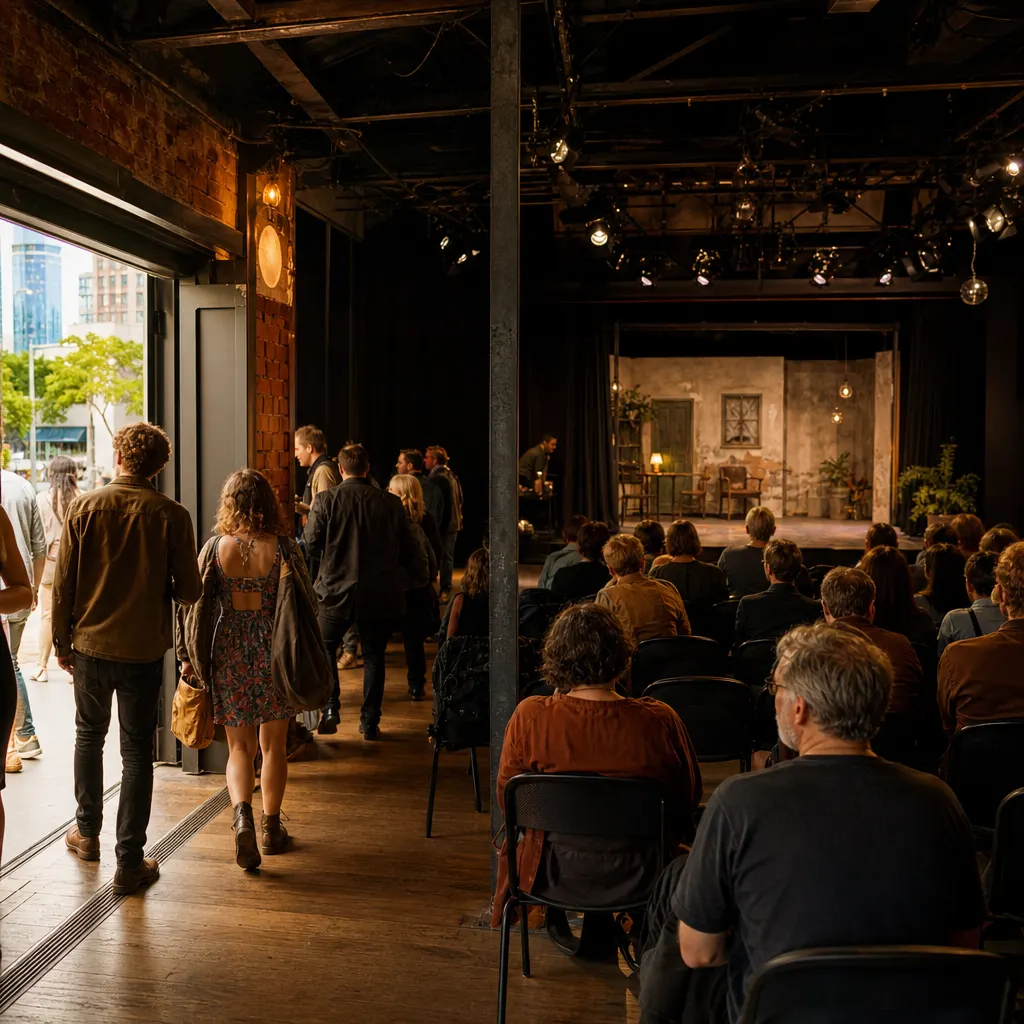
What You Can See
Independent theatre is not one fixed style. It describes work made outside the largest commercial and state-backed productions. Shows may be staged by small companies, collectives, emerging artists or experienced performers testing new ideas.
Some productions use a traditional stage and seated audience. Others place performers close to the crowd or move the action through several spaces. Short seasons are common, so a show may only run for a few nights. Programs can also change quickly.
New Australian writing is an important part of the scene. You may also find cabaret, physical theatre, comedy, devised work and small-scale musicals. Many shows address local stories or current social questions. Others focus on pure entertainment. For another perspective, see Meet the Makers: Brisbane’s Emerging Music Creators.
| Format | What to expect | Good for |
|---|---|---|
| New writing | Original scripts and developing local voices | Audiences interested in new stories |
| Experimental theatre | Unusual staging, structure or audience interaction | Visitors open to surprise |
| Cabaret and comedy | Direct performances with music, humour or commentary | A lively evening |
| Physical theatre | Movement-led storytelling with limited dialogue | Visual and performance-focused audiences |
| Small-scale musical | Live songs with a compact cast and production | Musical theatre fans |
Choosing the Right Production
Start with the event description. Look for clear notes about genre, running time and content. A short synopsis should tell you enough about the subject without revealing the full story. Production images may also show whether the design is polished, minimal or deliberately rough.
Venue size affects the experience. A studio theatre often creates close contact between the audience and performers. A warehouse or temporary space may feel less formal. A larger arts venue can provide more familiar facilities. No option is automatically better. Choose the setting that suits your mood.
Reviews can help, but they should not make the decision for you. Read for useful details about pace, tone and performance style. Personal taste varies. A difficult drama can be a strong choice for one person and a poor fit for another.
- Choose a mood, such as light comedy, tense drama or adventurous performance.
- Check the genre and synopsis for a close match.
- Review the running time, age guidance and content notes.
- Consider the venue size and seating style.
- Confirm the ticket price and booking conditions.
Before You Go
Independent venues vary in layout and facilities. Check practical details before booking, especially when the performance is held in a converted or temporary space. Do not assume that every venue has allocated seating, a foyer or food service.
Arrive early enough to find the entrance and collect tickets. Late admission may not be possible in a small room because it can interrupt the performance. Public transport and parking options can also differ between weekday and weekend sessions.
Accessibility information should cover the route into the building, seating, toilets and any audio or visual support. Contact the venue or ticketing organiser when the published details do not answer your needs.
- Performance start time and expected finish time
- Allocated, general admission or standing space
- Wheelchair access and accessible facilities
- Content warnings, age guidance and sensory effects
- Public transport, parking and the walk to the entrance
- Interval details and available refreshments
- Exchange, refund and late-entry policies
Planning a Theatre Weekend
One well-chosen show can be enough for a weekend. For a fuller program, pair a matinee with an evening performance. Leave a generous gap for travel and a meal. Two venues that look close on a map may still require extra time at night.
Mixing formats can keep the day varied. A new play in the afternoon can work well with comedy or cabaret later. Avoid booking two emotionally heavy productions back to back unless that is the experience you want.
Follow venues, festivals and independent companies for season announcements. Short runs can sell out or close before word spreads widely. Early booking also gives you more choice of dates and seats.
Why Small Stages Matter
Small theatres give artists room to develop work in front of an audience. Writers can hear how a new script lands. Directors can test different forms. Performers can take on roles that may not appear in larger commercial seasons.
These spaces also help audiences encounter stories from across Brisbane’s creative community. A modest production can introduce a new company or start a longer life for a play. Ticket purchases provide direct support, but attention matters too. Thoughtful reviews, recommendations and respectful discussion help local work reach new audiences.
Independent theatre does not need specialist knowledge from its audience. Curiosity is enough. Check the practical details, choose a show that matches your mood and make space for something unfamiliar. Explore more articles on Bravo Brisbane.